
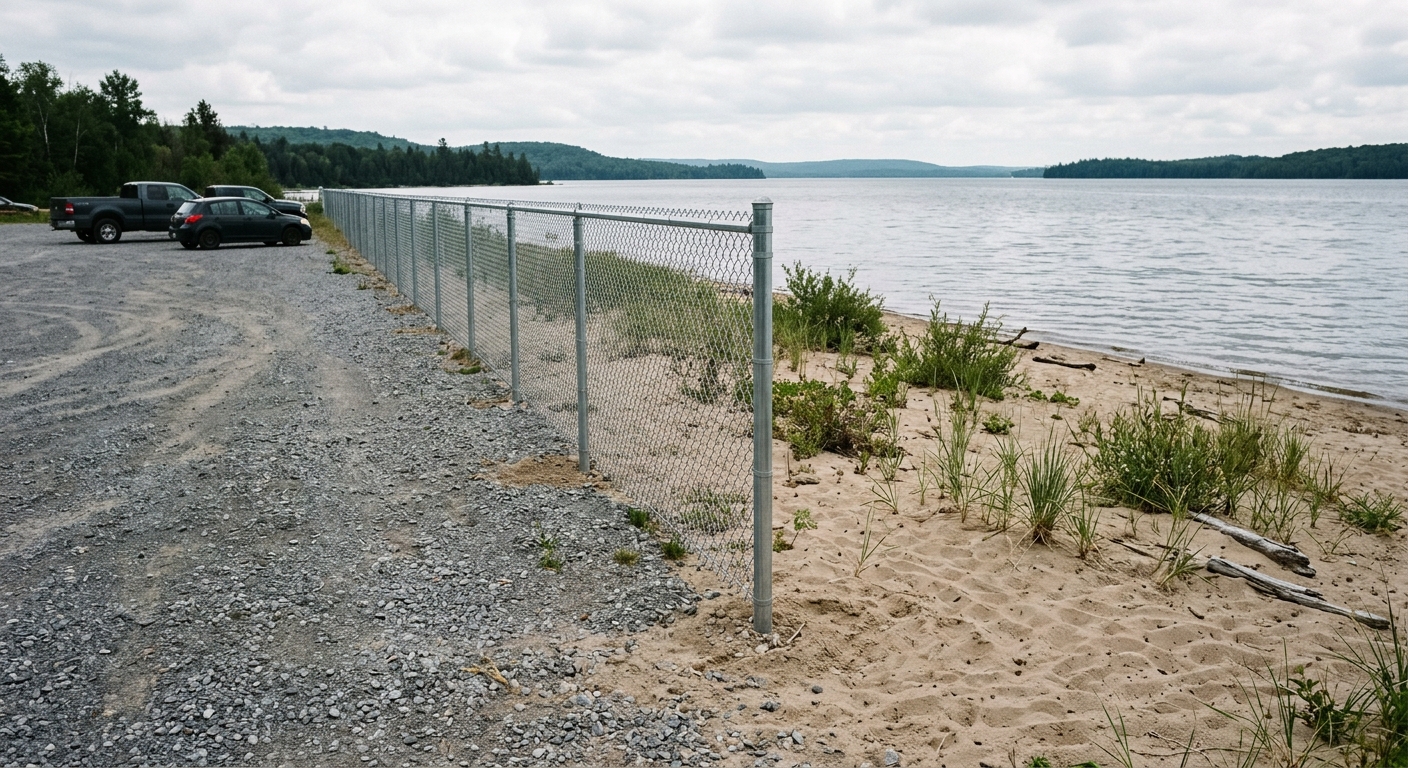
AI-generated illustration; not a photograph of the reported event.
- calendar_today August 7, 2026
The City of Port Colborne has been convicted in Ontario for violating the endangered species act after damaging the critical habitat of an imperiled amphibian. The ruling underscores the growing responsibility on municipalities within Ontario to uphold environmental protections amid ongoing urban development.
Fowler’s Toad Habitat Impacted by Parking Lot Construction
Between April and May of 2022, Port Colborne undertook parking lot construction and erected a chain-link fence near the public entrance of Nickel Beach. This area is recognized as vital for the Fowler’s Toad, a creature listed as endangered in Ontario and protected under the Endangered Species Act, 2007. The construction was determined to have removed natural sandy and vegetated open-canopy land required by the toads for burrowing, thermoregulation, and predator avoidance. Such disruption can induce lasting effects on local biodiversity and the survival chances of the toad population.
Years of Habitat Protection Guidance Ignored
According to court records, Ontario ministry staff had advised Port Colborne since 2015 on best practices and maintenance activities to safeguard Fowler’s Toad habitat. Despite these consultations, the recent activities at Nickel Beach did not adhere to recommended protocols. The species habitat violation prompted an investigation by the Environmental Investigations and Enforcement Branch, reflecting the priority placed by provincial authorities on biodiversity and habitat protection.
Court Ruling and Financial Penalties
The Niagara court’s decision found the city responsible for causing ecological harm and issued a symbolic fine of $1. More significantly, the court ordered Port Colborne to pay $80,000 to the Niagara Peninsula Conservation Authority. These funds are designated specifically to support ongoing and future efforts to protect and conserve the Fowler’s Toad in the region. The Niagara Peninsula Conservation Authority plays a leading role in restoring and safeguarding sensitive environments throughout Ontario, and this allocation will bolster their ongoing environmental enforcement programs.
Broader Significance for Environmental Conviction and Compliance
This environmental conviction serves as a reminder to municipalities and developers across Ontario of their responsibilities in relation to the endangered species act. Infrastructure projects such as parking lot construction, while critical for city access and tourism, must be balanced against the needs of vulnerable species and their environments. The case reaffirms the Ontario government’s commitment to habitat protection through regulatory and legal mechanisms. Local stakeholders, including residents and advocacy groups, have increasingly called for improved stewardship around Nickel Beach and similar ecological hotspots.
Future Outlook for Urban Development and Wildlife
With the ruling established, environmental groups and Ontario authorities are emphasizing the need for continued vigilance and collaboration among municipalities. Consultation with Ontario ministry staff and adherence to guidelines for species and habitat protection are expected to become further embedded in urban planning across the region. The lessons from Port Colborne’s species habitat violation highlight potential risks when procedures are overlooked, as well as the mechanisms in place for environmental enforcement.
Regional Implications and Community Response
The incident resonates with communities throughout Ontario, especially those near unique habitats like Nickel Beach. By highlighting legal consequences for non-compliance, the conviction aims to encourage broader respect for the endangered species act on a municipal level. The collaboration between the Niagara Peninsula Conservation Authority and Port Colborne, enforced through court directive, marks a proactive step toward sustainable development and long-term ecological balance in Ontario. Ongoing scrutiny is expected for future projects, reinforcing the critical role of environmental stewardship in regional planning.


