- calendar_today August 22, 2025
Ontario retailers are seeing Lululemon’s agony with demand and tariff issues in 2025. Find out how the local companies are adapting to such retail market changes.
Ontario Retailers See Lululemon’s Agony with Demand and Tariffs
Lululemon is also agonizing in 2025 as it is experiencing not only weak demand but also tariffs’ effects. This reality has caught the eye of Ontario’s retail sector, and local retailers are observing closely as the international athleisure behemoth works through these challenges. The union of softer consumer demand and higher tariffs on imports is impacting Lululemon’s operation, and Ontario companies are shifting their strategies due to these changing circumstances in the retail sector.
Lululemon’s Battle Against Sluggish Demand
Similar to other companies, Lululemon feels the decline in customer demand, which is affecting its sales forecast for 2025. Following a period of hyper-growth, the firm is feeling the slowdown as customers are becoming increasingly price-sensitive and opting for cheaper alternatives within the athleisure segment. In Ontario, where Lululemon is well-represented, local outlets feel the pinch as customers are less keen on shouldering costly purchases.
Demand weakness is not a Lululemon-specific issue but instead an extension of a larger trend that’s facing the fashion and apparel sector. Most consumers are opting for value-driven purchases and functional clothing as household budgets still struggle with inflation. That created a shift of consumers’ habits, and Ontario retailers are remounting their inventory and promotion strategies to more closely serve more price-sensitive consumers.
Tariff Issues Haunt Lululemon’s Pricing
Aside from poor demand, Lululemon is also dealing with the effects of increasing tariffs, which have put a higher cost on the company to export goods and raw materials into Canada. The additional cost is affecting Lululemon to increase its prices, which might deter some consumers further from buying its products.
Ontario retailers are watching closely how Lululemon deals with these additional costs. Some indigenous companies already feel the impact of increased tariffs on imported goods, so they too change their pricing strategy. Although some sellers are able to bear the cost hikes, others have to shift them on to the consumers, which may influence total sales. The dilemma for big chains such as Lululemon and small community retailers is balancing staying competitive and profitable within a market where increasing costs are becoming an issue.
Local Retailers Adjust to Changing Demand
Since Lululemon argues that there is softer demand and higher prices, Ontario retailers are renovating their products to attract buyers. Most Ontario businesses are emphasizing less expensive versions of athleisure apparel to capitalize on more expensive brands such as Lululemon. In this process, they are purchasing the products locally or smaller, cheaper alternatives with similar designs but at lower prices.
Ontario consumers are also focusing on function and versatility in product lines since they acknowledge that the contemporary consumer wants value rather than luxury. Functional, versatile, and usable products both during work out and street fashion are becoming popular. Since Lululemon has been finding it difficult to cope with demand for its luxury athleisure, local consumers are meeting this demand through products that cater to a wide spectrum of budgets and requirements.
Sustainability and Green Shopping Trends
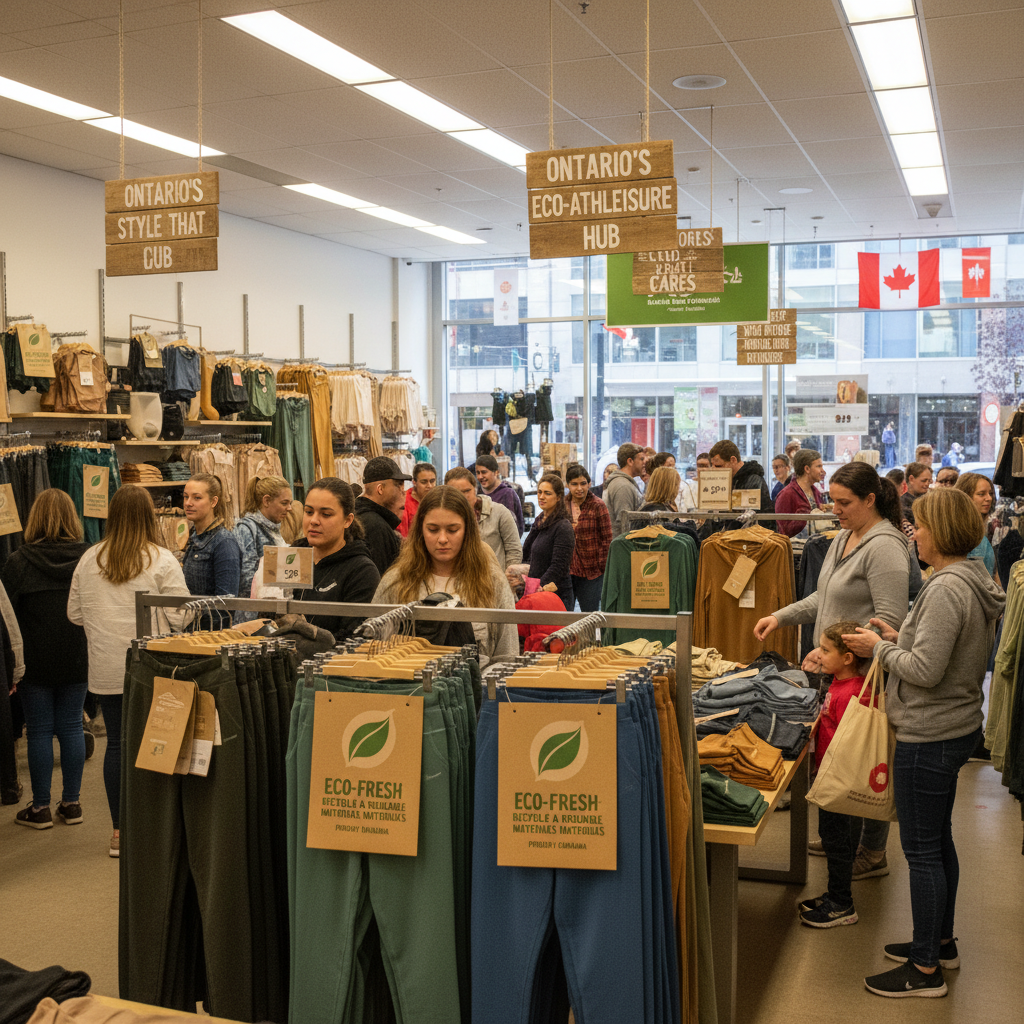
Yet another emerging trend in Ontario is increased interest in green and sustainable products. While Lululemon struggles with tariffs and softening demand, regional retailers are riding the wave of increased interest in sustainable apparel. Consumers are more likely to buy from brands that share an environmental conscience, and regional retailers are meeting their demands by carrying green athleisure products that focus on ethical production, recycled content, and environmentally friendly production processes.
Pressure for sustainability has led some Ontario retailers to emphasize brands that embrace such values and substitutes for conventional brands like Lululemon. By emphasizing their embracement of sustainability, the retailers are also appealing to customers who would adore making more sustainable clothing buying decisions.
The Future of Ontario’s Retail Market In the Wake of Lululemon’s Troubles
Ontario retail space is changing as Lululemon navigates through weak demand and tariffs. Ontario store owners are keeping a close eye on how those challenges play out and reshaping their business model to respond. Some will diversify away from their product base using cheap, sustainable solutions, while others are investing capital trying to make the in-store experience unique enough to build loyalty and engage consumers on an emotional level.
As the year 2025 starts, Ontario companies are ahead of the game in preparing for the needs of a changing marketplace. With Lululemon’s challenges as a wake-up call, Toronto consumers are keeping pace with the suffering of name-brand names and are putting themselves into position to succeed in an increasingly cost-sensitive and competitive world. The future of the Ontario retail market will depend on the ability of companies to adapt to the new consumer priorities along with the ongoing issues of tariffs and inflation.
Lululemon’s struggles with soft demand as well as tariff-related problems are also severely affecting Ontario’s retail sector. While the company adapts to these, on-the-ground retailers are responding by providing cheaper, sustainable options and streamlining products. With changing consumer sentiment, Ontario’s business owners are being flexible and responsive to consumers’ demands, staying competitive and ready for 2025 and the years to come.