- calendar_today August 20, 2025
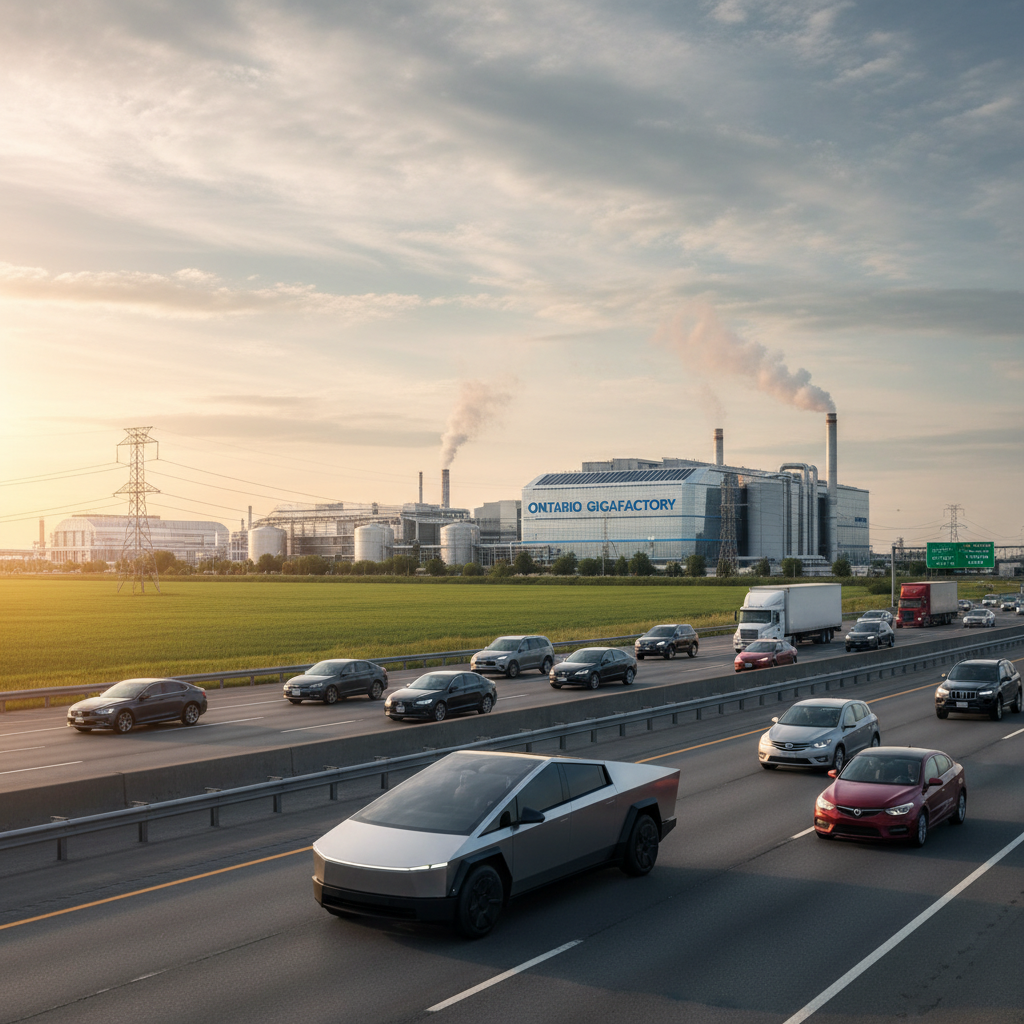
Ontario, Canada’s largest province by population and economic output, holds a vital place in the nation’s automotive and electric vehicle (EV) revolution. Home to Detroit North and Canada’s historic auto manufacturing base, Ontario is rapidly transforming as traditional automakers expand EV production and battery plants proliferate. In this dynamic setting, Fisker Inc. (NYSE: FSR) has emerged as a curious yet risky proposition for investors seeking exposure to the EV sector. The question for Ontario investors: Can Fisker overcome its operational hurdles and become a meaningful player in Ontario’s fast-growing clean transportation market by 2030?
Ontario’s Automotive Legacy and EV Transformation
Ontario’s automotive industry directly employs over 100,000 people and accounts for roughly 12% of the province’s GDP. The transition to electric vehicles represents both a challenge and an opportunity. Government programs like the Ontario Electric and Hydrogen Vehicle Incentive Program (EHVIP) and support from the Canadian federal government have accelerated EV adoption, with over 40,000 EVs registered in Ontario as of 2024—a figure expected to grow exponentially.
Several global automakers with a significant presence in Ontario, including Ford, General Motors, and Stellantis, have announced multi-billion-dollar investments in EV manufacturing and battery cell plants in the province. Ontario also hosts critical suppliers and research hubs, such as the Automotive Parts Manufacturers’ Association and MaRS Discovery District, fueling innovation in electric mobility.
Fisker’s Position Amid Ontario’s EV Ecosystem in 2025
Fisker, known for its Ocean SUV and the upcoming Pear compact EV, has garnered attention but also skepticism. The company’s production delays, supply chain disruptions, and heavy reliance on Austria’s Magna Steyr for manufacturing contrast sharply with Ontario’s increasing focus on local production. This overseas outsourcing disqualifies Fisker from some Canadian and provincial EV incentives that favor domestically produced vehicles, limiting its appeal to Ontario consumers and fleet buyers.
For Ontario investors, many of whom have connections to local OEMs or EV component firms, Fisker represents a high-risk, high-reward stock. Its ambitions to ramp up Ocean SUV production in late 2025 and launch the Pear by mid-2026 will be key milestones watched closely by regional markets and industry stakeholders.
Forecasting Fisker’s 2030 Stock Trajectory for Ontario
Analysts broadly see three potential trajectories for Fisker’s stock price through 2030, framed by its ability to scale and localize production:
- Bull Case: Fisker achieves robust growth by meeting production targets and expanding the model lineup, surpassing 200,000 vehicles sold annually. This would generate $6–$8 billion in revenue, potentially driving the stock to $25–$30 per share. Such growth aligns well with Ontario’s push to become North America’s EV manufacturing powerhouse, supported by infrastructure investments like battery plants by LG Energy and Stellantis.
- Base Case: More moderate growth results in annual sales of 75,000 to 100,000 vehicles, revenue between $3–$4 billion, and stock prices near $8–$12. This scenario may appeal to Ontario investors balancing exposure to growth with risk, especially amid broader economic uncertainties and competitive pressures.
- Bear Case: Fisker continues to struggle operationally, missing production goals and facing liquidity issues. In this scenario, sales stagnate and investor confidence wanes, keeping stock prices in a $3–$5 range—an unattractive proposition for more risk-averse Ontario institutional portfolios.
Ontario’s Manufacturing and Policy Edge
Ontario’s EV future depends heavily on local manufacturing. With recent government investments exceeding CAD $2 billion toward EV infrastructure and battery production, the province is aggressively courting domestic and international firms. The challenge for Fisker is that current production arrangements offshore limit its access to incentives designed to boost local industry and jobs.
To compete effectively, Fisker must explore partnerships or joint ventures with Ontario-based manufacturers or battery producers, potentially collaborating with firms such as Magna International or local EV parts suppliers. These strategic moves would not only improve its incentive eligibility but also help build trust among Ontario consumers who value Canadian-made vehicles.
Investor Sentiment and Market Dynamics in Ontario
Institutional investors in Toronto’s financial district, including pension funds and ESG-oriented asset managers, have displayed cautious interest in Fisker. While concerns over operational setbacks and capital management persist, some retail investors and innovation-focused venture funds view Fisker as a promising clean-tech disruptor if it can execute on its plans.
Ontario’s growing EV charging infrastructure, with government-backed projects expanding fast-charging networks along major corridors, also supports consumer adoption, a critical factor in building Fisker’s market.
Looking Ahead: Fisker’s Ontario Investment Outlook
As Ontario transitions rapidly toward electrification, Fisker’s long-term viability hinges on its ability to adapt production closer to home, secure capital, and navigate fierce competition from established automakers like Ford and GM. Investors should watch for timely launches of new models, progress on production scale, and any moves to localize manufacturing.
Fisker’s story remains one of potential mixed with significant risk, reflecting the broader challenges facing emerging EV companies in Ontario’s competitive and evolving market.