- calendar_today August 27, 2025
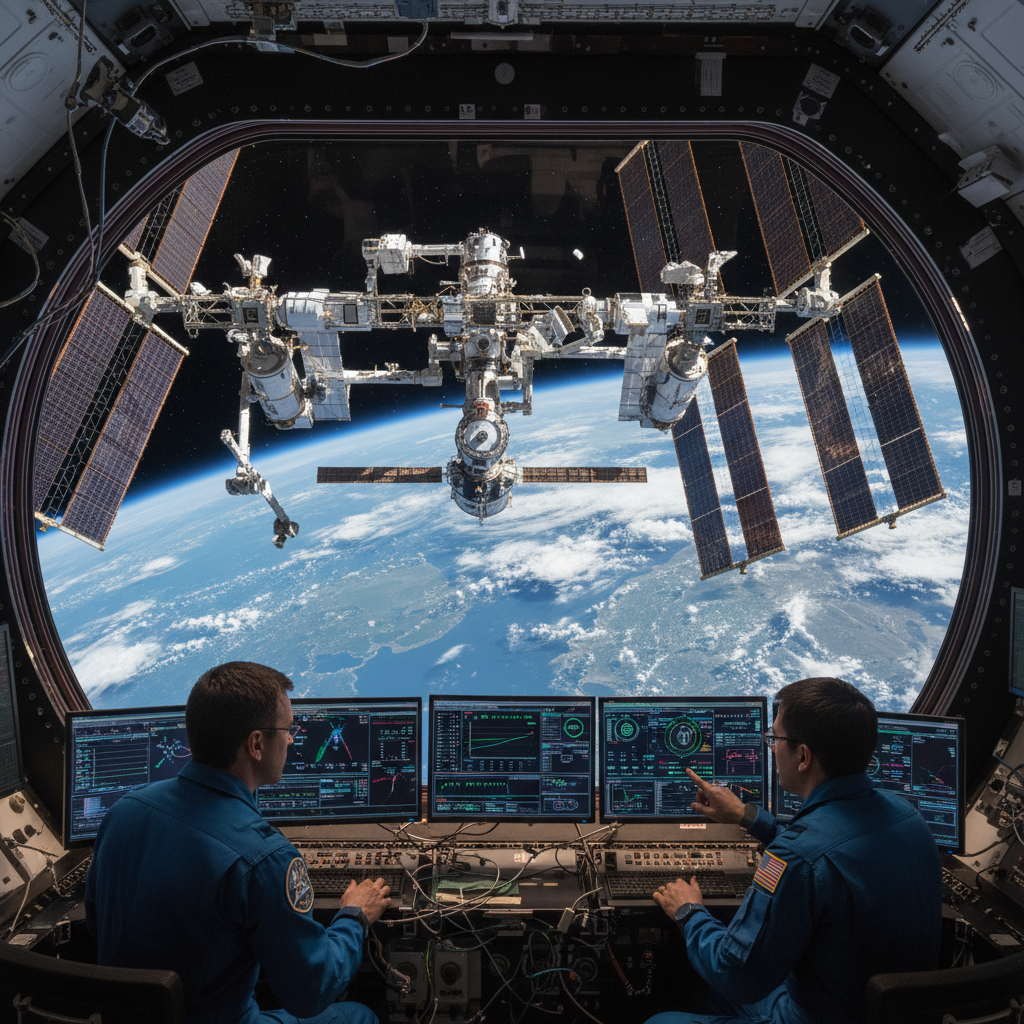
NASA has postponed the Axiom Mission 4 launch because a new air leak on the International Space Station (ISS) triggered worries. NASA and Roscosmos are evaluating the current situation which led to the delay of the planned commercial mission that would transport four astronauts to the International Space Station. NASA confirmed the delay but did not provide numerous specific details. Numerous reports indicate that the leak represents a major problem because most of the ISS hardware has been in orbit for nearly three decades.
The station has previously faced problems with air leaks. The ISS has experienced a gradual pressure loss since 2019. The transfer tunnel on the Russian Zvezda service module had been pinpointed for years as the primary leak source in the ISS because it is the station’s oldest component. The PrK section serves as the connection between the Zvezda module and the docking port where Soyuz crew capsules and Progress resupply vehicles regularly attach. Russian cosmonauts carried out multiple repair attempts to fix the small cracks in this section throughout the years. The repair efforts reduced the air loss rate to a couple of pounds per day but failed to halt it completely. The best solution found so far involves keeping the PrK module hatch closed at all times except when docking is required.
Roscosmos revealed earlier this month that they finished repairs on the PrK module which they announced as “completely sealed.” NASA confirmed this by reporting that leak rates in that module had ceased. At first glance this development appeared to be a substantial advancement. However, things quickly became confusing. The PrK leak was reportedly repaired yet the ISS’s air pressure persisted in its downward trend. Two sources verified that the station continued to experience pressure loss but the source of the leak remained unidentified.
Experts currently suspect that the hatch seals leading into the PrK module could be causing the problem. The seals around the hatch might be letting air from other parts of the station flow into the PrK even when the PrK’s interior is sealed. As a result the PrK module maintains consistent pressure levels while the ISS continues to experience pressure loss. The problem defies easy resolution which has led NASA to adopt a careful strategy. A top industry official revealed to Ars Technica that NASA’s leaders expressed concerns regarding the current situation and its potential effects on the ISS’s structural robustness.
NASA postponed the scheduled Thursday launch of Axiom Mission 4. In a brief statement, the agency said: NASA and Roscosmos gained extra time to assess the situation and decide if further troubleshooting is required because of the Axiom Mission 4 launch delay.
There’s another layer of concern: The ongoing leaks may indicate high cycle fatigue within the spacecraft materials. The ISS structure contains aluminum which develops this condition after experiencing repeated stress during extended periods. If you bend a metal clothes hanger repeatedly in opposite directions its structural integrity will break. This same principle applies to spacecraft. The phenomenon of metal fatigue can trigger unexpected catastrophic failures as seen in 1988 when a section of Aloha Airlines aircraft’s fuselage tore apart during flight due to metal fatigue.
NASA’s risk assessments use its internal 5-by-5 risk matrix to categorize structural cracking on the ISS as the highest level of concern because of potential dangers. The crew faces no imminent danger but the extended consequences remain concerning.
NASA has not released any further information and also has not arranged a press conference to discuss the issue at hand. In response to media inquiries, the agency has reiterated a single point: The International Space Station crew continues to perform their standard duties safely.
Still, the silence leaves many questions unanswered. The recent leak reveals how difficult it becomes to keep a laboratory as old as the ISS functional while operating under extreme space conditions. Engineers work diligently on identifying the root problem while the public remains in anticipation for both answers and a lasting resolution.