- calendar_today August 20, 2025
.
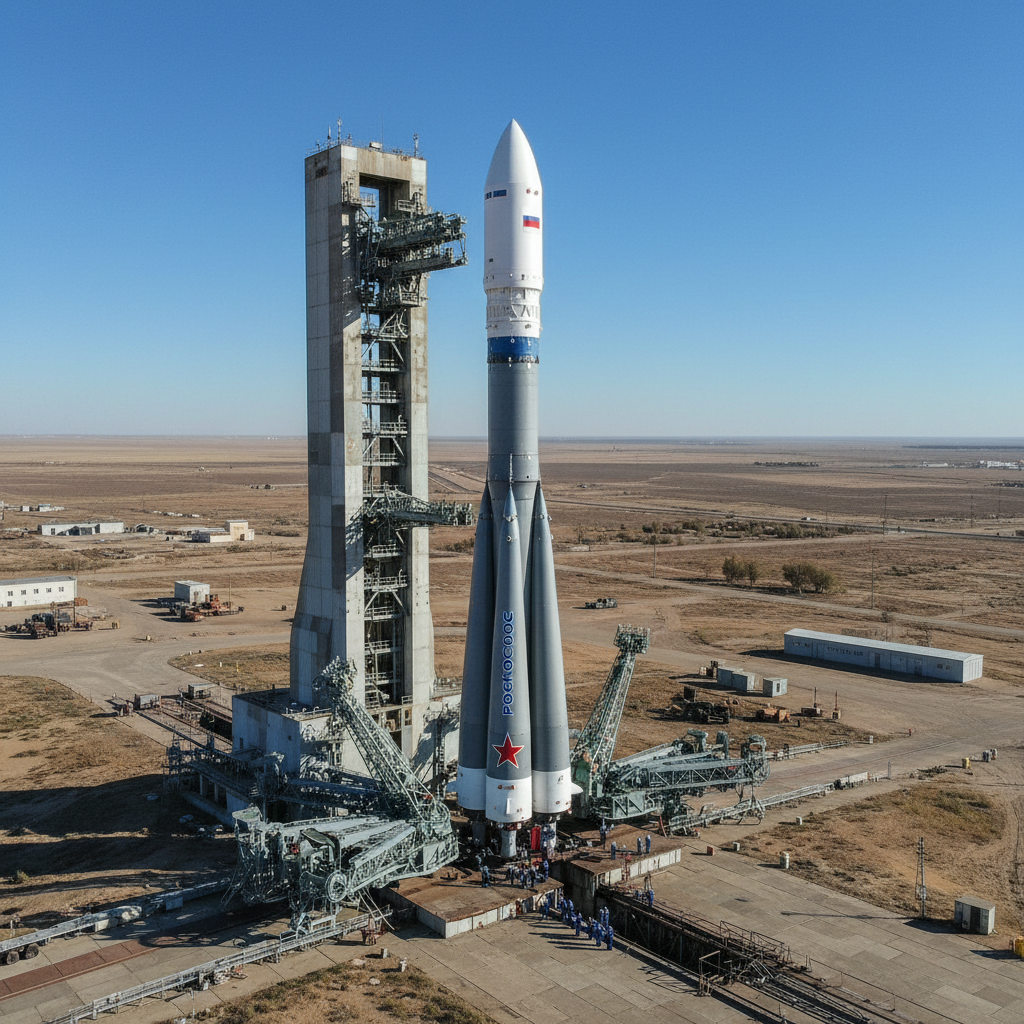
Russia is set to fly its next-generation Soyuz-5 rocket before the end of the year. Roscosmos chief Dmitry Bakanov announced the ambitious schedule to state news agency TASS in an interview published this week.
“Yes, we are planning for December,” Bakanov said. “All preparations for the first launch are now in the final stages of implementation.” Soyuz-5 will lift off from the Baikonur cosmodrome in Kazakhstan. If it flies as expected, this will mark the maiden flight of a vehicle that has been in development for over a decade. Roscosmos has yet to publish its full launch schedule, but the agency anticipates several test flights before putting the rocket into regular service, expected to begin in 2028.
The new Soyuz rocket isn’t, however, a clean slate design. The rocket is largely a domestic successor to the Zenit-2 rocket, an originally Ukrainian design from the 1980s that was co-developed at the Yuzhnoye Design Bureau. Zenit rockets were assembled in Ukraine using engines supplied by Russia, a Roscosmos space launch system. It was one of few remaining vestiges of cooperation between the two post-Soviet aerospace industries. That relationship came to an end following Russia’s invasion of Ukraine in 2022. In late 2023, a Russian airstrike hit the Ukrainian facility where Zenit rockets were assembled.
Soyuz-5 is similar to Zenit, but much larger, and made entirely in Russia. That redesign makes the new rocket less dependent on other countries, as all key systems are produced by Roscosmos-affiliated factories. For Moscow, that achievement is no small feat, bringing an end to the longstanding reliance while also ushering out the previous, aging Soyuz launcher that began operations in the 1960s.
Bridging Two Eras
Technical classification-wise, Soyuz-5 is a medium-lift rocket. It has a lift capacity of around 17 metric tons to low-Earth orbit (LEO), according to early reports. It has slightly more propellant capacity than Zenit to reach that performance. The most important change is under the hood: The Soyuz-5 will be powered by the RD-171MV engine. This is the latest and most advanced iteration of that family.
The engine’s roots trace all the way back to Energia, the Soviet Union’s failed space shuttle program of the 1980s. Energia’s vehicle was built around a central RD-170 engine that remains the most powerful ever built to this day. Buran, the shuttle it gave rise to, flew only one time in orbit in 1988 before being grounded. Since then, a derivative version of the RD-170 has powered Zenit rockets.
The RD-171MV engine is powered by kerosene and liquid oxygen, but one difference sets it apart: It has no Ukrainian parts. The engine produces over 860 metric ton-force of thrust. That’s over three times the thrust of NASA’s Space Shuttle main engine, which propelled the U.S. space agency’s own expendable shuttle to orbit for almost three decades. The RD-171MV remains the most powerful liquid-fueled rocket engine currently in operation.
Soyuz-5 itself, by contrast, is an expendable rocket. Its two main stages are not designed to survive landing for recovery and reuse like SpaceX’s Falcon 9 or China’s similar Long March 5B, a move that limits its commercial appeal to a degree. It may be tough to attract commercial customers to launch payloads on Soyuz-5 given how many cheaper and more reliable competitors now exist, including both SpaceX and Chinese launch providers.
That said, the rocket does remain a key part of Roscosmos’ launch plans, however. Developing a completely new, reusable launch vehicle from scratch is a tall order, especially if funding for R&D has been limited due to both war costs and international sanctions. A program to do just that, dubbed Amur or Soyuz-7, is far down the road: Its first stage will be reusable, and it will use methane-fueled engines similar to those on SpaceX’s Starship. The hope is that such a rocket can bring launch costs down to an international competitive level. But its first flight has already been pushed back to at least 2030 due to delays.
In the here and now, Soyuz-5 is thus an interim step, a stopgap to keep the Russian space industry going until better, more modern times. That it will use a more powerful rocket engine with no Ukrainian parts is a win for Roscosmos and the Kremlin, but it is also a legacy design with limited improvements to its launch capacity.
The commercial outlook is also uncertain for Soyuz-5. The international launch market has evolved considerably in the last decade, with SpaceX and Chinese companies both offering more competitive options, especially for commercial launch services. Russia has no shortage of other rockets for launching crewed missions (Soyuz-2) or heavier payloads (Angara). But neither of those has yet been able to gain international market share.
It remains to be seen whether Soyuz-5 will be able to change that trend. What’s certain is that Roscosmos has done a remarkable job of achieving a Soyuz-5 launch under sanctions and a stretched budget. December’s flight would mark a successful new step for Russia, capable of putting new hardware on the pad if not rewriting rocket design.