
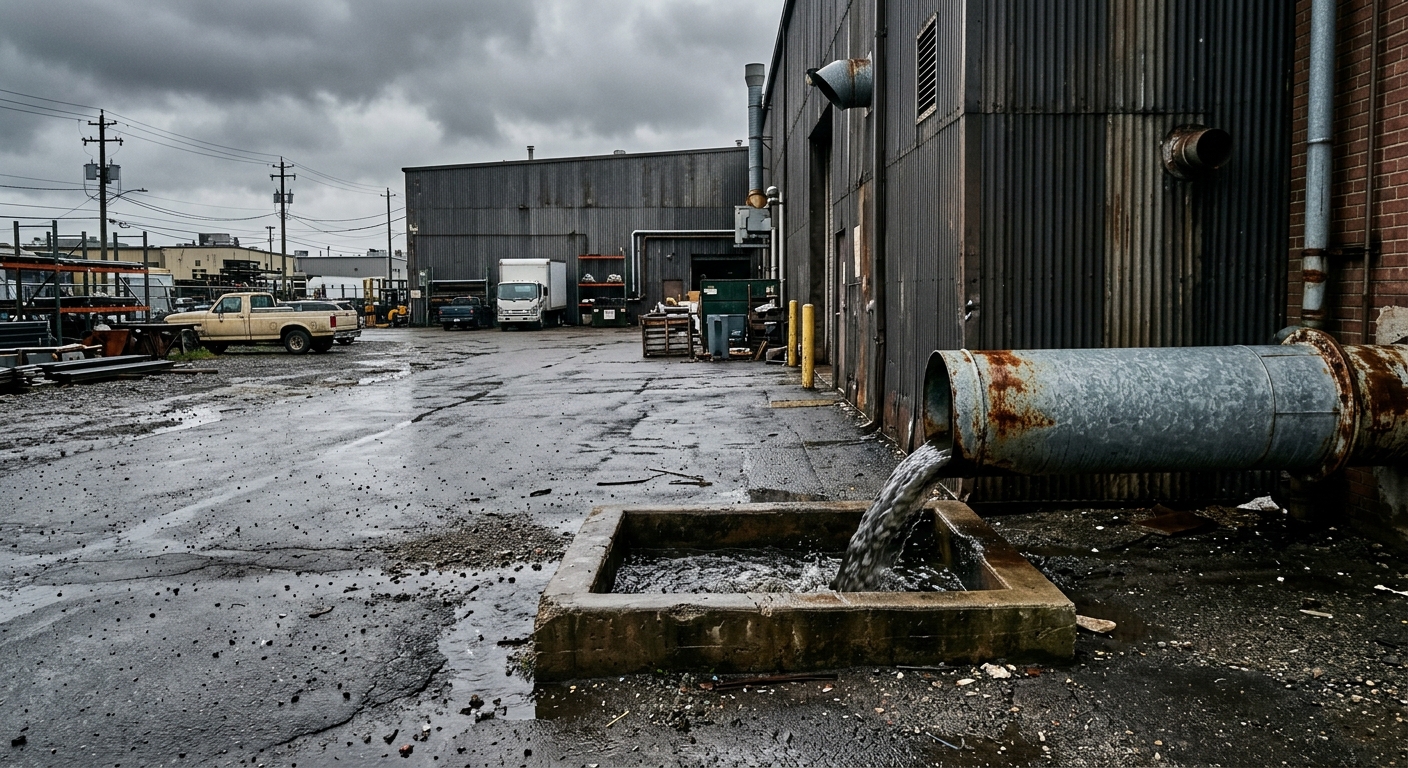
AI-generated illustration; not a photograph of the reported event.
- calendar_today August 8, 2026
A Niagara Falls-based chemical manufacturing company has been fined following a conviction for improper stormwater management in Ontario. Mancuso Chemical Limited was found in violation of the Ontario Water Resources Act after operating a stormwater system without obtaining required ministry approval, drawing attention to the importance of environmental oversight in the region.
Regulatory Oversight in Ontario
On August 11, 2023, ministry staff observed unauthorized stormwater discharge from the Mancuso Chemical Limited site. This discharge occurred despite the company’s submission of an application for environmental compliance approval, which had not yet been granted. The observation led to a formal investigation and, eventually, legal action by Ontario’s Environmental Investigations and Enforcement Branch.
Details of the Conviction and Fines
Following a thorough environmental investigation, the Niagara Falls company was convicted on December 18, 2025, for operating without ministry approval. Mancuso Chemical Limited was fined $9,000 and issued an additional victim fine surcharge of $2,250. The convicted business now has 60 days to pay the penalty, marking a significant financial and operational repercussion for failing to secure the appropriate permissions in advance.
Ontario Water Resources Act in Focus
This incident illustrates a clear regulatory violation under the Ontario Water Resources Act. In Ontario, manufacturers handling potentially hazardous materials are required to comply with comprehensive regulatory frameworks, including obtaining environmental compliance before any stormwater system operation. According to the ministry, strict enforcement of these laws ensures the protection of local water sources and community health.
The Role of Environmental Compliance in Chemical Manufacturing
Within the chemical manufacturing sector, adherence to environmental rules is crucial. Stormwater systems frequently collect water that may contain residues or contaminants, making proper approval—such as environmental compliance approval—essential prior to discharge. Mancuso Chemical Limited’s case highlights the risks of neglecting this step, as regulatory penalties are designed to deter future infractions and encourage better corporate responsibility across Ontario.
Ministry Enforcement and Ongoing Monitoring
Ontario’s Ministry of the Environment, Conservation and Parks remains vigilant, with its ministry enforcement branch continuing to monitor industrial operations throughout the region. The ongoing oversight is aimed at preventing unlawful stormwater discharge and upholding the standards set forth by the water resources act. Such actions are especially relevant in a region like Ontario, where water protection is a top priority for both residents and local authorities.
Implications of Environmental Fines
The environmental fines levied in this case reinforce the government’s commitment to holding industries accountable for lapses in environmental compliance. Local stakeholders in Niagara Falls and the broader Ontario community have a vested interest in supporting rigorous regulatory enforcement to safeguard natural resources. The ministry’s work in environmental investigation and enforcement is instrumental in upholding these protections and ensuring businesses prioritize compliance from the outset.
Looking Forward for Ontario Industry
Cases like this serve as reminders to companies operating within the chemical manufacturing sector—and across all industries—that environmental compliance approval is not optional. The combination of oversight, investigation, and fines demonstrates a concerted effort by Ontario authorities to foster both economic vitality and environmental stewardship across the region. For the people of Ontario, continued vigilance remains essential in maintaining water quality and environmental standards now and in the future.


