
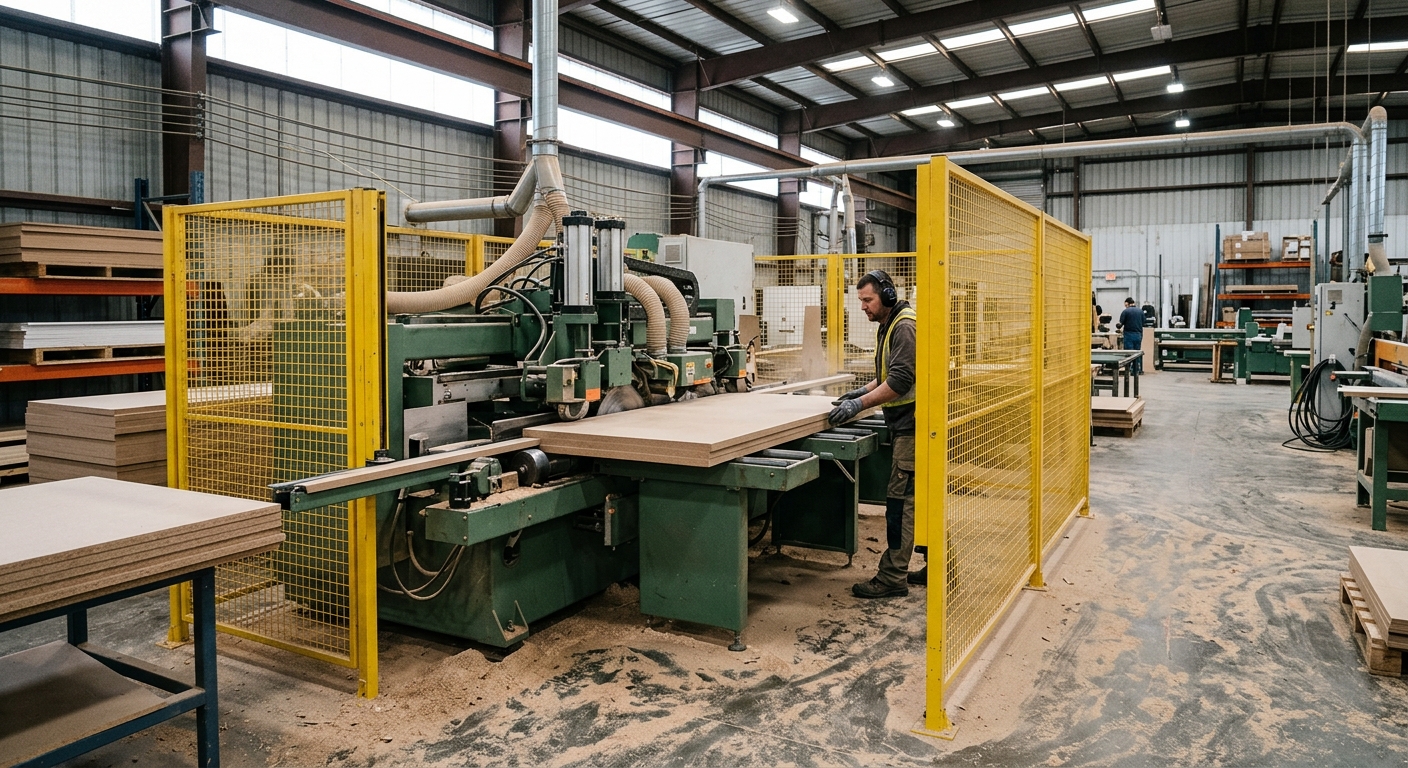
AI-generated illustration; not a photograph of the reported event.
- calendar_today July 10, 2026
An Ontario manufacturing company was fined $50,000 after a workplace injury highlighted critical lapses in machine guarding and safety regulation compliance. The incident, which involved a Cornwall-based employee of Ridgewood Industries Ltd., brings renewed attention to occupational health and safety measures across the region’s industrial sector.
Incident Details: Unprotected Machine Nip Point Causes Injury
On February 20, 2025, a worker at Ridgewood Industries Ltd. in Cornwall, Ontario, suffered severe injuries while handling an MDF board on a Sizing and Edge Banding Machine. The worker was exposed to the machine’s hazardous nip point between the top and bottom cone rotators due to the absence of proper guarding. This situation arose after a section of the machine’s protective fencing, typically equipped with safety shutdown and lockout mechanisms, was removed, circumventing established safety protocols.
Legal Proceedings and Safety Regulation Violations
The Ministry of Labour’s investigation determined that Ridgewood Industries failed to comply with Ontario Regulation 851 and the Occupational Health and Safety Act. These regulations mandate stringent machine guarding to prevent worker injury in all industrial operations. The company was subsequently convicted for not ensuring that the machinery was adequately protected, a breach that resulted in significant consequences for both the injured worker and the broader workplace safety culture.
Penalty Imposed and Victims’ Fund Surcharge
Following legal proceedings, the court upheld Ridgewood Industries’ conviction on June 16, 2026. In addition to the $50,000 fine, the company was ordered to pay a 25 percent victim fine surcharge as stipulated by the Provincial Offences Act. Funds collected from this surcharge support a provincial program benefiting victims of crime, reinforcing the intersection between workplace safety fines and broader community welfare.
Ontario’s Ongoing Focus on Workplace Safety
This case underscores the heightened focus on workplace safety and occupational health in Ontario’s industrial sector. Workplace injuries such as this incident highlight the risks posed by industrial accidents and the necessity for rigorous machine guarding systems. The regional government and local institutions continue to champion comprehensive safety regulation, urging companies to prioritize safety compliance and invest in robust occupational safety training and protocols.
Implications for Industrial Employers and Workers
Employers throughout Ontario are reminded of their responsibilities under the health and safety act to implement effective safety compliance systems. Regular safety audits, thorough employee training, and strict adherence to all guidelines are critical measures in preventing future worker injury. Occupational health officers recommend a proactive approach, ensuring that every aspect of workplace safety, including equipment safeguards, is routinely evaluated and maintained.
Community Impact and Future Prevention Efforts
The outcome of this case serves as a cautionary tale for industrial employers and workers in Ontario and beyond. It demonstrates that lapses in occupational safety protocols carry not only legal and financial repercussions but have tangible effects on workers’ lives and community wellbeing. Ongoing collaboration between industry leaders, regulatory bodies, and workers is essential for reducing the risk of industrial accidents and strengthening the province’s overall safety culture.


